
RV Surge Protectors

Start here before hookup

Choose the protector first, then finish the connection.

For most RV owners, the cleanest buying path is not a wall of parts. It is one first decision: match your RV's amperage, choose Basic or Smart protection, then make sure the cord or adapter path fits the campsite.

1Pick 30A or 50AMatch the plug your RV actually uses.
2Basic or SmartLED protection or Bluetooth visibility.
3Then match the cordAdapters come after the protector choice.
Direct checkoutSold through RV Power Essentials.
Setup helpBuilt for a safer first hookup.
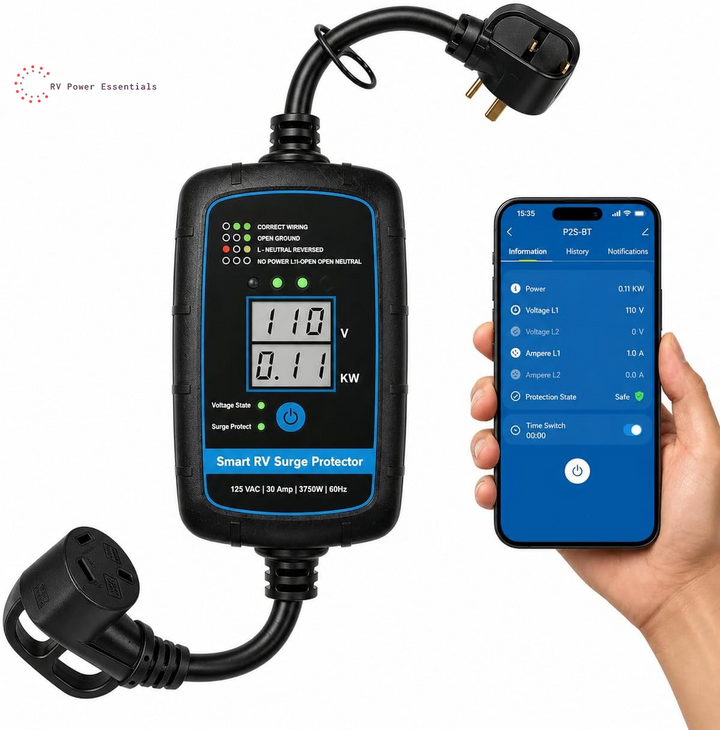
30A/50A RV Surge Protector with Basic or Smart Bluetooth Monitoring
From $64.95

Protect your RV before bad campground power reaches your equipment.

RV surge protectors and EMS units help defend your electrical system from unsafe pedestal conditions, voltage problems, wiring faults, and power events that can damage appliances, electronics, and onboard systems.

The right protection depends on your RV amperage, whether you want portable or hardwired installation, and whether you need advanced features like low-voltage disconnect, monitoring, or emergency power shutoff.

Already shopping for protection? Browse RV Surge Protectors & EMS Units →

30-second decision

  • Choose EMS protection when possible. A basic surge protector helps with voltage spikes, but an EMS can also protect against low voltage, high voltage, wiring faults, and unsafe pedestal conditions.
  • Portable units are easiest for travel. They plug in at the pedestal and are simple to move between campgrounds, but they can be exposed to weather or theft.
  • Hardwired units are best for permanent protection. They stay installed inside the RV and protect every hookup without needing to plug in a separate device each time.
  • Smart monitoring adds visibility. Bluetooth or WiFi models let you see voltage, faults, and power conditions instead of guessing what the pedestal is doing.
  • Do not assume all “surge protectors” do the same job. Some only handle spikes, while EMS units can disconnect power during dangerous voltage or wiring conditions.

Key differences

Not all RV surge protectors offer the same level of protection. The biggest difference is whether the device only reacts to surge events or actively monitors campground power for dangerous conditions before they reach your RV.

  • Surge-only protection vs. EMS: Basic surge protectors help guard against voltage spikes and certain wiring issues. EMS units go further by monitoring high voltage, low voltage, open ground, reverse polarity, and other unsafe pedestal conditions that can damage sensitive RV equipment.
  • Low voltage protection matters: Brownouts are one of the biggest campground power risks. A basic surge-only unit may not disconnect during low voltage, while many EMS units can shut power off before appliances and electronics are stressed.
  • Portable vs. hardwired installation: Portable units are convenient and easy to replace, making them popular for travelers. Hardwired units are installed inside the RV, which makes them harder to steal and easier to use consistently.
  • EPO and automatic disconnect features: Emergency Power Off and automatic shutoff features add another layer of protection by disconnecting power when conditions become unsafe. These features are especially valuable for RVers who frequently plug into unknown campground pedestals.
  • 30A vs. 50A compatibility: Surge protection needs to match your RV service. A 30A RV and 50A RV use different protection devices, and adapters do not change the protection rating your RV actually needs.

System fit: Surge protection works alongside your hookup gear. Before plugging into shore power, make sure your cords and adapters are properly matched too. See RV Power Connectors & Adapters ->

Finishing the hookup: Choose protection first, then match the pedestal, RV amperage, extension cord, dogbone, and weatherproof cover so the full connection path makes sense before power reaches the rig.

Decision factors

  • EMS protection for low-voltage and wiring faults
  • Portable units for flexible campground use
  • Hardwired units for permanent protection
  • Match protection to 30A or 50A RV service
As an Amazon Associate, RV Power Essentials earns from qualifying purchases.
Amazon recommendations

Complementary hookup tools

These are specialized options for a setup outside the protectors we keep in our direct store. Match the connection and amperage before you buy.

Power Watchdog PWD30EPOHW Smart RV Hardwired Surge Protector — 30 Amp, EPO + WiFi
Amazon affiliate link

Power Watchdog PWD30EPOHW Smart RV Hardwired Surge Protector — 30 Amp, EPO + WiFi

Smart Hardwired Protection with EPO
30 Amp Hardwired, EPO + WiFi

Who it's for: RVers who want a permanent, set-and-forget protection system with Emergency Power Off (EPO) and remote monitoring that stays installed inside the RV.

Known limitation: Requires hardwired installation (may need professional assistance) and is less portable than plug-in units.

FAQ

Q: What is the difference between a surge protector and an EMS?

A: A basic surge protector mainly helps with voltage spikes and some wiring issues. An EMS monitors more conditions, including low voltage, high voltage, open ground, reverse polarity, and other unsafe pedestal problems.

Q: Do I need low-voltage protection for my RV?

A: Yes, it is strongly worth considering. Low voltage can stress appliances, air conditioners, converters, and electronics. EMS units that disconnect during unsafe voltage can help prevent expensive damage.

Q: Should I choose portable or hardwired surge protection?

A: Portable units are simple and flexible for travel. Hardwired units are permanent, harder to steal, and always in place when you plug in. The better choice depends on how you camp and how much installation work you want.

Q: Do I need a 30A or 50A surge protector?

A: Match the surge protector or EMS to your RV’s electrical service. A 30A RV should use 30A protection, and a 50A RV should use 50A protection.

Q: Is smart monitoring worth it?

A: For many RV owners, yes. Bluetooth or WiFi monitoring helps you see voltage and fault conditions instead of guessing whether the campground pedestal is safe.